Writing Tips: Em Dash, Ellipsis and Error
Let’s talk about flow for a moment. I am not one for punctuation. Anyone that reads my work will quickly discover that I am awful with it. I try to work around it by using different wording or shorter sentences. I imagine to myself this will hide my weakness. But to an expert, a pro it will be obvious.
There are three things I would like to talk about. This has to do with the flow of a sentence, its basic appearance. The em dash, the ellipsis, and the double space error are also three things that can call you out to an agent or editor.
I’ve written for decades now, but only recently, or so I believe, have I taken notice of the little things of writing that are really much larger than I ever imagined.
The em dash:
In all honesty I had never heard of this until recently. Oh, sure I have seen it but I didn’t know it had a name. I should have known everything has a name and if it doesn’t someone will come along to name it shortly just so they can say they did it.
 You are to use the em dash when there is a sudden change or interruption in the sentence. Strunk and White states to use this only when a more common form of punctuation will not seem to work. That seems a little vague to me. But if you take a look at just about any form of writing you will see the em dash everywhere. By the way, the em dash is a double dash. Basically it is called an em dash because it takes up the widest letter font, the letter m. The en dash is a single dash.
Some writers just use it any time they like instead of commas or semicolons. Why? Either they think it’s cool or they don’t know punctuation or it could just be a style. Is it wrong? Truthfully, writing styles are slowly becoming less and less strict with structure but there is a purpose to proper structure. It isn’t just for a good grade. It’s for a good read.
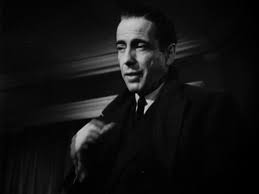
For me, I think I would use the em dash in harsh situations, or rather tough talk situations. If I were writing a detective novel I think the em dash would fit. I can see Humphrey Bogart in the Maltese Falcon reading out the punctuation of the dialogue now and I can hear ‘dash’ instead of ‘comma’ coming from him. Bogey did rapid fire dialogue great and he could switch between directions of dialogue so quick you almost didn’t see it happen. That script must have been em dash loaded.
“We beat it down to the docks and kicked the door in.”
“You did what?” Carson asked.
“I said—what’s she doing here?” Sam looked at the woman walking in the door.
Carson looked at the long legs as they passed him. “Sam—she’s doing anything she likes.”
In this example you get the fill that Sam immediately changes his words as the woman walks in. There is no pause. He just goes straight into questioning. For me that works. In the second case it doesn’t work for me. To me Carson is pausing after he says Sam as he thinks about the woman, so the em dash is too harsh there. The ellipses wouldn’t work because there is no missing dialogue or trailing off, there is just a hesitation so I would use the comma.
The Ellipsis:
The ellipsis is when you use (. . .). Of course that is without the parenthesis. You use three periods with a space between each one. Again, I had no idea such a thing had a name. And would you believe it . . . I had been using it wrong all these years. I didn’t put a space between the periods. Oops. And, I just used it incorrectly. And no, I did not do that intentionally. I read back through this article and found it. It happens, so always proofread your work.
 You use this when a sentence is trailing off or you are picking up in the middle of a conversation or a place I use it is when I am writing a telephone conversation but we only hear one side of it.
“We beat it down to the docks and kicked the door in.”
“You did what?” Carson asked.
“I said . . . what’s she doing here?” Sam looked at the woman walking in the door.
Carson looked at the long legs as they passed him. “Sam . . . she’s doing anything she likes.”
Now we have a pause here instead of the em dash and it’s as though Sam has looked at the woman a moment first before speaking.
The second pause works for me, but it’s not right. A comma will do the job.
“We beat it down to the docks and kicked the door in.”
“You did what?” Carson asked.
“I said–what’s she doing here?” Sam looked at the woman walking in the door.
Carson looked at the long legs as they passed him. “Sam, she’s doing anything she likes.”
Combining the both the em dash and the comma pause in the passage works for me because I get a change of pace with each. There is a sense of urgency from Sam and casualness from Carson. It adds to character development with just a little change in punctuation.
The Space After Punctuation:
People from my age and older learned to type on typewriters, even if they were electric ones. This means we learned to hit the space bar twice after the ending punctuation of a sentence. For all those who do that, STOP! Computer fonts are set so that everything is spaced properly.
An agent or editor will look at your work and immediately see the spacing error. Should this be a killer to your career? No, but many agencies use interns and they like to sort through the submissions and for a punctuation pet peeve artist or someone who has a space phobia you have put them off already and they’ll just not continue. Hit the space bar once…ever.
© Copyright-All rights reserved-RonovanWrites.wordpress.com-June 16, 2014.
 ronovanwrites