The American Style Cinquain made easy.

I’ve written a couple or more posts recently on how to write an American style cinquain developed by Adelaide Crapsey. But… sometimes I can get a bit wordy. So, let’s get unwordy.

If you like Haiku, which this blog has a history of, you’ll like the cinquain. It’s 5 lines with a syllable structure of 2/4/6/8/2. This isn’t by accident. Adelaide was a fan of haiku.

Here is an example of an American cinquain I wrote:

Remember

Away

To foreign lands

And dreams of saving hopes,

Reality of breaking hearts.

Look back.


I wrote about Memorial Day and the soldiers who went to war. Some had hopes and dreams of changing the world, saving lives, and bringing freedom where there was none. Many never came back, or have since passed away, bringing sadness to their loved ones. We remember those who we’ve lost on Memorial Day.

To write an American cinquain, I took the idea I just shared and made it as concise as I could, using the most descriptive words I could think of at the time. The first four lines are one feeling and are moving forward, with the final line flipping to look back and is related to the first line.

And that’s how an American cinquain often is. Here with ‘Remember’, you can see the relationship of ‘Away’ and ‘Look back’. It can be seen in two ways. One way is those who have left, gone away, can look back after they’ve left, or secondly, it can be the loved ones looking back on the memories.

Now that you know how to write one, join the prompt each week. Leave your link in the comments of that week’s prompt and people might visit your blog to check it out.
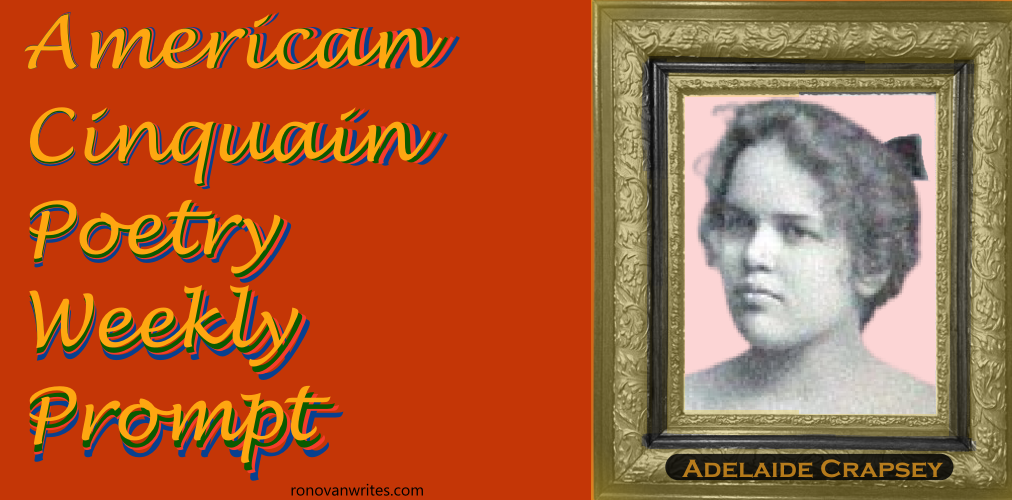
 

American Cinquain Poetry Prompt


Enter your email address to subscribe to this blog and receive notifications of new posts by email.


© 2025- Ronovan Hester Copyright reserved. The author asserts his moral and legal rights over this work.


 

The Magnificent 7 of Cinquain… Styles… other than the American one.

Over the pervious two posts I’ve explained how to write an American Cinquain as developed by the early 20th century poet Adelaide Crapsey. With the style of poetry being named “American” Cinquain or a Crapseian, then there must be other types of cinquain. I don’t plan to get into a lot of detail, but I thought it would be useful to give some information. You may have written a cinquain and not realized it.

Including the American Cinquain, there are six other styles traditionally recognized. Although I suppose there would actually be seven.

Standard Cinquain

This is the original five line stanza poem with no syllable restrains and included a rhyming pattern such as ababb, abaab, or abccb. The poems are usually made up of multiple stanzas. The Standard has its beginning in medieval France.

Reverse cinquain

The reverse cinquain’s form is all in its name… the reverse of the American Cinquain. The syllables are 2/8/6/4/2, the reverse of the normal American Cinquain.

Didactic cinquain

This type of cinquain does not use a syllable count but instead uses a word count of 1/2/3/4/1. This form might be one many are familiar with as it is often taught to grade-school children.

Butterfly cinquain

The butterfly cinquain is a nine poem with the syllables being 2/4/6/8/2/8/6/4/2.

Mirror cinquain

This style is the American Cinquain of 2/4/6/8/2 a blank space then 2/8/6/4/2. The blank space separates the stanzas as opposed to the Butterfly cinquain which shares a line, the 2 syllable fifth line.

Crown cinquain

Here we go. A big one. Five stanzas of American cinquain. Yes, that’s right. 25 lines of poetry. Blank spaces are between the stanzas.

Garland cinquain

This style is not of the American Cinquain. It is from the Standard Cinquain. There are six stanzas. The first five are unique, but of course linked in meaning like any other poem. The sixth stanza is made of lines from the first five stanzas… line 1 is from line 1 of the first stanza, line 2 is from line 2 of second stanza and so on. This sounds like one we’ll be doing soon for fun.

And those are the Magnificent Seven Cinquains…not including the American one…which would make it eight.


Enter your email address to subscribe to this blog and receive notifications of new posts by email.


© 2025- Ronovan Hester Copyright reserved. The author asserts his moral and legal rights over this work.
How to write a Cinquain poem – Part 2

In the previous post I talked about the American Cinquain form created by Adelaide Crapsey and how it is a five line poem with a format of either syllables 2/4/2/8/2 or iambs of 1/2/3/4/1. You can try your hand with the first of our Cinquain Poetry Prompts that came out this past Monday. And don’t get concerned about iambs if you’re not a poetry nerd. Remember ‘nerd’ to me is a good word. Think of iambs as how many syllables are stressed in a line of poetry. Like in music there is something called meter or a beat. Or the tick tock of a clock and the tock is the stressed part. (I know, I’m over doing it. But I do that sometimes.)

Although syllables and iambs are important, the actual content is even more so. Nature. Emotions. Even an event. Here is my example:

OLD DAYS

See how
The sun rises,
Breaking over beauty,
Filling the senses with heaven
Then fades.

It can be nature, emotion, or an event. I didn’t plan for it that way. It just ended up like that after I finished and read it for the final time.

You see, the first four lines are all linked with a purpose. They are telling a story, feeling, or thought, building and building. Then in the final line, what I built is broken. Yes, there was a time where beauty and more would bring joy each morning, increasing each time, but in the end, it all fades away and I was left with nothing. This could be about a literal sunrise or perhaps a lost relationship.

It doesn’t always have to do with emotions. One reason Adelaide Crapsey’s poetry deals so much with emotions and her mortality was because of her tuberculosis at such a young age. She was only 36 when she passed.

Once you have your topic for your poem, write it. Then the work begins. The creativity begins. You look for the perfect word to give the most impact, to deliver as much of what you’re trying to relay. With so few lines and syllables, much like a Tanka, you need to be precise. Practice makes perfect. Althought, not every poem needs to be perfect. If you tried to do that, you might never share a poem with others because you’re afraid you didn’t achieve what you or others expected. Believe me, I know. I have dozens of incomplete poetry drafts sitting here in my blog I’ve never posted.

YOUTH

But me
They cannot touch,
Old Age and death … the strange
And ignominious end of old
Dead folk!

ROMA AETERNA

The sun
Is warm to-day,
O Romulus, and on
Thine olden Palatine the birds
Still sing.

NIAGRA

How frail
Above the bulk
Of crashing water bangs,
Autumnal, evanescent, wan,
The moon.

THE GUARDED WOUND

If it
Were lighter touch
Than petal of flower resting
On grass, oh still too heavy it were,
Too heavy!

“The result is a form of poetry that is short, meditative, imagistic, and above all delicate—a quality regarded as beautiful in and of itself.” litcharts.com


Enter your email address to subscribe to this blog and receive notifications of new posts by email.


© 2025- Ronovan Hester Copyright reserved. The author asserts his moral and legal rights over this work.

How to write a Cinquain poem – Part 1.

With the new poetry prompt having started this past Monday, (Prompt #1), I thought I could share more about the Cinquain style, and more specifically the American Cinquain.

If you know a little about languages you’ll probably realize that ‘Cinqua’ means five.

Cinquains are, in their simplest form, poems of five lines or stanza. Yes, that’s a Quintet for you know-it-alls. We like to put formulas and rules to what we do, but the truth is that it’s as simple as that… Five Lines. But we like a challenge so we put constraints on what we do to get those creative synapses going. If that’s the right way of thinking about it. I’m not looking it up.

There are various types of cinquain, one of which is the didactic cinquain taught to school aged children.

If we were writing a cinquain instead of the American Cinquain, we would be using a rhyming scheme. You could do that with the American Cinquain, but it’s not how Adelaide Crapsey developed it. In some ways, the American Cinquain gives us more freedom to be creative.

If you’ve been visiting this site for a while, you might know that Haiku has been a big part of its history. Guess what Adelaide Crapsey liked? The five line haiku poetry form called Tanka. Like a Tanka, the only true requirement of a Crapseian cinquain, yes that is another title for an American Cinquain, are the syllables.

2/4/6/8/2


Or is that the requirement?


You see, Adelaide Crapsey never wrote down what her style required. We only have a structure based on what others have come up with from studying her work. Not that they’re wrong. Some have stated the line lengths should be based on counting iambs or stressed syllables. How does that change the length from being syllables? It would instead be 1/2/3/4/1.

There is some evidence for the iambs idea, such as the following poem.

NOVEMBER NIGHT

Listen . . .

With faint dry sound,

Like steps of passing ghosts,

The leaves, frost-crisp’d, break from the trees

And fall.


Basically, use what you like. That’s what Adelaide did.

Read How to write a Cinquain poem – Part 2.

Enter your email address to subscribe to this blog and receive notifications of new posts by email.


© 2025- Ronovan Hester Copyright reserved. The author asserts his moral and legal rights over this work.


You’ll Connect with this story. (and a Free giveaway.)

8 Questions with author Florence A. Bliss.

The end of a road.

I’ve been doing the Haiku Challenge for a long time. If I were to go until #520 it would be exactly 10 years. There has never been a missed week of a challenge. That’s through hurricanes, power outages, stays in the hospital, illnesses, and just not feeling like doing it. #500 is about to come out and that will be the last one.

The challenge began during a time in my life where poetry  was a big part of my healing after the accident that pretty much changed my life. Trying to come up with the prompts each week may sound easy but when you try not to repeat too much, wow, it’s just something else.

It also help lead to my not writing poetry. With the end of the challenge I’m hoping I will want to begin writing again.

To those who’ve stayed with me all these years, I thank you for that loyalty… or insanity… or OCD nature. There will be other things I’ll be sharing, so it’s not like the end of the blog and only the Ovi Challenge will be the lone post each week. It’s just I’m not a super blogger like I was back in the beginning. That’s not why I blog.

Much Respect,

Ronovan

So Much To Share… #CoverReveal #SasaJ

Your friend and mine!!!

Go get it.

Ritu's avatarRitu Bhathal

Hello there, my long-lost friends!

Firstly, let me apologise for not posting for around half of this year.

What can I say…

Being a full-time teacher in management, having recently been through the OFSTED debacle (we got Good, so I’m not complaining, but still, STRESS!), on top of being mum to two teens at critical points in their lives and development, as well as wife and daughter… yadda yadda… well, put it this way, it leaves little time for the creative side of me.

Still, I have news and lots of it!

Over the summer, I finally completed the manuscript for my second book, which will be book two in the Rishtay Series, following on from Marriage Unarranged.

It was sent off to several readers, my editor and my publisher, and though tweaks are still happening, we have a release date of 1st June 2023 to coincide with PRIDE month!

View original post 452 more words

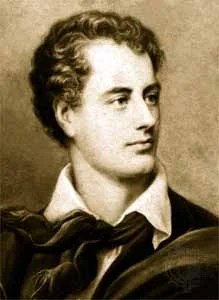
Lord Byron’s Birthday January 22, 1788.

January 22, 1788

George Byron, destined to be Lord Byron, is born in Aberdeen, Scotland. Born into poverty and with a clubfoot, no doubt two emotionally influencing circumstances, he would then at the age of 10 become Lord Byron when inheriting his great uncle’s title. A world traveler, poet, and the father of a mathematical genius, August Ada King, Countess of Lovelace (She’s considered the world’s first computer programmer for work on Charles Babbage’s computing machine.).

Scandal followed him until he settled in Geneva near Percy Bysshe and Mary Wollstonecraft Shelley. He got involved with Mary’s sister, had a daughter then raced off to Vienna for a wild time with Countess Teresa Guiccioli.  He died at the age of 36.

Who else could have written Don Juan? Click the title to go to a site that will have another link for a pdf of the poem. So, no, you won’t download anything by clicking my link.

For further information click below.

https://www.britannica.com/biography/Lord-Byron-poet


Lord Byron image.
Lord Byron circa 1820.

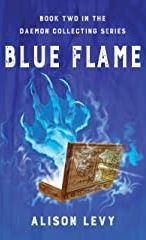
Review of Blue Flame: Book Two of the Daemon Collecting Series by Alison Levy.

A standalone in a series that makes me want to read the first and can’t wait for the next.

Ronovan's avatarLit World Interviews

Blue Flame book cover. Box with a etheral hand coming out of it.
  • Title: Blue Flame: Book Two of the Daemon Collecting Series
  • Author: Alison Levy
  • Print Length: 415
  • Publisher: SparkPress
  • Publication Date: October 11, 2022
  • Language: English
  • Formats:  eBook and Paperback (At various outlets including Amazon and B&N.)
  • Genres: Science Fiction, Fantasy
  • Purchase links below. Audible also available

Abe Books Icon to clickamazon logobarnes & noble logoBook Depository image to clickgoogle play books logoindie bound logoalibris book site logothrift books logo

Rakuten Kobo logoIndigo Book site Logo

apple books logo

I received an Advanced Reader Copy of this book for an honest review.

Author Alison Levy creates a universe/world called Nota, that is parallel to our own in which everything here exists there but with a twist of Fantasy and Science Fiction being a reality. It is a bit more layered than that with other dimensions playing havoc with Nota. One very young character tries to protect his mother from an enemy only he can see. Another tries to reclaim his life, while another character desires to learn about a culture from another dimension. All this occurs while trying to solve…

View original post 846 more words

Interested in being a Book Reviewer or other?

Lit World Interviews is a site I started many years ago where authors can get free online promotion.

Now I’m looking for some new Book Reviewers and people who have advice to share in the areas of Writing, Self-Publishing, and Book Promotion.

This is a great opportunity to share their opinions on books that sometimes are overlooked. Also to share the experience one might have that can help others achieve their dream of becoming an author with their book in the hands of readers.

LWI is a volunteer run site.

I would like to get some posts going again in regards to:

  • Book reviews
  • Self-publishing: Both the how to and promotion. Speaking from experience and/or sharing article links and advice from the pros. This tend to be our most viewed articles over time. Our former resident experts really knew their stuff.
  • If you writing/editing/style advice.

This isn’t an every week thing, or even once a month. It’s as you can do them.

email me at litworldinterviews @ gmail.com if you are interested.

It would be helpful if you include something from the following, so I can see work you may have done:

  • Which of the mentioned areas you would like to participate in.
  • Your site address, if you have one
  • Your name, of course
  • Your social media outlets. The ones you are willing to share posts on. And if you are willing to share the other posts from the site to Twitter, automatically. That’s how they CAN occur, but not MUST occur.
  • Your genre interests (I don’t really have a no genre approved list. But I’m sure something will come up someday. But I’m not looking for that one to occur.)
  • Links to any reviews you may have done on Amazon or Goodreads

email me at litworldinterviews @ gmail.com if you are interested.

Sincerely,

Ronovan

Question for Writers- Software/Programs.

I am wondering if any of you writers out there could tell me what Writing Software/Program you have found useful. It can be FREE or something you must PURCHASE. If you’ve had bad experience with one, please let me know in the comments. I’ll leave it there so I don’t influence your ideas by what I’m needing. Why? Because I may need something totally different than what I think I do.


Thanks in advance,

Ronovan

Why my poetry reads like it does.

Art imitates life. Well, usually that’s the other way around but for me and this blog… So, I thought I would give everyone a little bit of an explanation about how weird some of my poetry is lately. If you’ve been following the blog long enough you know that I pretty much write what’s going on, for the most part. Sometimes it could just be inspired by a song or the beat of a song. Lately it’s about life.

One thing I love about haiku is that with so few words you can have so many meanings. For me, the meaning of my poetry is pretty simple, but when I read them again I can see how they can be interpreted them other ways. I mean I like writing a poem that is so clear to me but can be something else to others and completely opposite to anything I thought of at first.

Life is crazy at the moment for me. I am having to exist to keep my mother eating and moving and living while at the same time trying to do the same for me who has been isolated from the world for almost nine years. I drive now, for the first time in that long. I do everything. Not complaining, although I really am complaining but I can because I know all of the stuff.

So, I say all of that to explain that my poetry starts out to be a positive and moving forward thing but may end up sounding a little negative. It’s just word selection and how I use those words. I like to throw a twist in there.

Expect some attempts at funny and randomness. I loved writing that way back when I started the blog. Expect some poetry that reads like songs. I can hear the beat even if you can’t, although I try to write the words in such a way that you might figure it out.

Keep reading!


Enter your email address to subscribe to this blog and receive notifications of new posts by email.

© 2014-2022-  Ronovan Hester Copyright reserved. The author asserts his moral and legal rights over this work.

Destination? – a poem

Destination?

My heart’s desire fades across time and space, racing the waves.

Yet, no matter the path traveled, my passion remains full and bright.

But should desire be fuel for the attainable or the denied?


This is my entry for this weeks Sijo Poetry Challenge with theme/inspiration of PASSION

There are details in the prompt on how to write a Sijo, a syllable based poetry form similar to a haiku but originating in Korea.

Enter your email address to subscribe to this blog and receive notifications of new posts by email.

© 2014-2022-  Ronovan Hester Copyright reserved. The author asserts his moral and legal rights over this work.

Destruction

Destruction

I lower my guard, allowing the enemy inside.

Destruction of life’s joys … built on untold moments of tears.

My parapet’s construction begins anew upon rubble and quicksand.


This is my entry for this weeks Sijo Poetry Challenge with theme/inspiration of GUARD.

***Not inspired by current celebrity events. Prompt challenge and poem written on Sunday.***

There are details in the prompt on how to write a Sijo, a syllable based poetry form similar to a haiku but originating in Korea.

Enter your email address to subscribe to this blog and receive notifications of new posts by email.

© 2014-2022-  Ronovan Hester Copyright reserved. The author asserts his moral and legal rights over this work.

Unavoidable: a Sijo poem.

Unavoidable

Time passes with twists and turns; a relentless force.

One day the scent of life’s wind is sweet, the next sour with despair.

Will the next season be rancid or rejoiceful?


This is my entry for this weeks Sijo Poetry Challenge with theme/inspiration of Season.

There are details in the prompt on how to write a Sijo, a syllable based poetry form similar to a haiku but originating in Korea.

Enter your email address to subscribe to this blog and receive notifications of new posts by email.

© 2014-2022-  Ronovan Hester Copyright reserved. The author asserts his moral and legal rights over this work.

Ronovan’s Update Update

An update: My Mother came home Thursday, and without scheduled rehab or in home health care. Meaning I’m it. At about 9 pm or so on the same day we received a call that my father was fading. We made it to the hospital, was misdirected to his room. It took almost 10 minutes and a nurse to finally lead us to him, only to have missed his last moments of consciousness. We made the decision to obey his wishes. We went home and as we sat in our chairs the phone rang. He had just passed away. He waited until my mother was comfortable in her chair and safe in their home.

Now I’m with her and I have to say that helping to rehab a 68 y/o former nurse who just lost her husband of 45 years and knows nothing of finances is an experience.


I wanted to let everyone know that I’m still here. My mother fell and broke her hip early Thursday morning and I went to stay with my 89 year old father. Well at about 1 am this morning I had to call 911 for my father who has something called IPF. A lung condition.

She’s doing better and he is in ICU.

A wonderful 5 days.

Ronovan’s Update

I wanted to let everyone know that I’m still here. My mother fell and broke her hip early Thursday morning and I went to stay with my 89 year old father. Well at about 1 am this morning I had to call 911 for my father who has something called IPF. A lung condition.

She’s doing better and he is in ICU.

A wonderful 5 days.

Kimberly Hess on Sarah B. Cochran, the Inspiration Behind “A Lesser Mortal”

If you are into women who blazed the trail for others in industry, education, and more you need to read this article and get the book. She was on par with Andrew Carnegie in her philanthropy and business acumen.

And share the post on your Social Media platforms.

Ronovan's avatarLit World Interviews

Kimberly Hess on Sarah B. Cochran, the Inspiration Behind “A Lesser Mortal”

I grew up with the power of women’s experiences in the stories I heard about female ancestors and relatives. Whether they were politically active, ahead of their time, or overcoming enormous obstacles, each one’s story helped me to understand what I could do. One in particular was Sarah B. Cochran. When my parents and I regularly visited family in southwestern Pennsylvania, I saw artifacts from her life, like the mansion and church she had built, which were being added to the National Register of Historic Places when I was a little girl. I also knew that her decision to put my great-grandmother through college in 1917 still influenced my life many years later.

In that part of the country, it seemed that everybody knew something about her work in the Connellsville coke industry or respected her public and…

View original post 1,371 more words

The Schemer.

The Schemer

There is a man who we can surmise,
by his words and actions,
he plots our nation’s demise.

His ego is such he cares not one whit,
if we rise to the top,
or stay mired in our own____.


Enter your email address to subscribe to this blog and receive notifications of new posts by email.

© 2021- Ronovan Hester Copyright reserved. The author asserts his moral and legal rights over this work.