FRIDAY FICTION with RONOVAN WRITES Prompt Challenge #3

Friday Fiction with Ronovan Writes Challenge

For those already signed  up for the Free eBook Project, please note Smashwords will likely be the first platform used. I am looking into Amazon’s policies, but I know Smashwords allows eBooks FREE all the time, not just a price matching feature. But if I find Amazon is Free from the beginning, then we may go both routes to allow all our friends a chance to read, not just those with Kindle or Kindle apps for eReading.

IF YOU WOULD LIKE COMMENTS ON YOUR WRITING, PLEASE NOTE AT THE END OF YOUR ENTRY THE AREAS YOU WISH FOR THE READER TO COMMENT ON, OR IF YOU WISH FOR AN OVERALL OPINION.

FRIDAY FICTION with RONOVAN WRITES

With decades of writing behind me and daily learning of how to be a better writer, and by daily, I do mean constant, I wanted to give a way for current friends and future finders of this blog a way to push themselves to improve as well.

Through this challenge my hopes are:

  1. you will find your voice
  2. step out of comfort zones to discover a genre where your talent truly lies
  3. perhaps make connections that will help you become a better writer

DEADLINE IS:

23:59 EST Wednesday. I will then have Thursday to complete reading the entries and compiling the links and such. I do read all entries. You can ask any of my Haiku Challenge family/community members.

I DO ASK THAT YOU:

  • Keep it PG as all ages do follow the blog and may click through and read the entries. (C0ntinue for exceptions.)
  • If you do write a piece of fiction that goes past the PG level, copy the link into the comments of this post and make a note of it being such and give the reasons you think it is, such as violence, sexual content, language/profanity.
  • No violence toward children by adults or predatory aspects toward children. I know you may have two kids have a fight. I get that, but I don’t want gratuitous violence such as glorifying bullying. Also I can see you having a kid kicking some bad guy in the face for some reason. I get it.
  • No sexual assault against anyone.

WHEN YOU HAVE COMPLETED YOUR WORK OF FICTION:

Copy and paste your URL in the comments of the challenge post, or do a ping back to this post. This does not mean you must share a link today, Friday, just because the challenge says Friday in it. It means you must return to this post or ping back to this post.

A ping back is copying and pasting the URL of the challenge post into your post. That lets people know about the challenge, sort of, and is one way to let me know you’ve entered. Just make certain to visit back here to see your ping back is showing. Confused? Click HERE to see how to do a ping back.

If your blog is with WordPress, TAG your post as Friday Fiction with Ronovan Writes and in this way people may find your work in the WP Reader.

IMPORTANT!

It is possible, depending on the success of our challenge and the quality of writing, I may want to publish Anthologies, collections of stories, on Smashwords or Amazon in a FREE e-book format. IF YOU ARE INTERESTED IN ALLOWING YOUR WORK TO BE SHARED IN THIS FASHION CLICK HERE FOR DETAILS and a form to fill out. If you just want to write, enter, and have fun then you don’t need to do anything except write, enter, and have fun. And if you do try out the anthology idea and you change your mind you can always fill out the form and do what it says. It’s explained in that link.
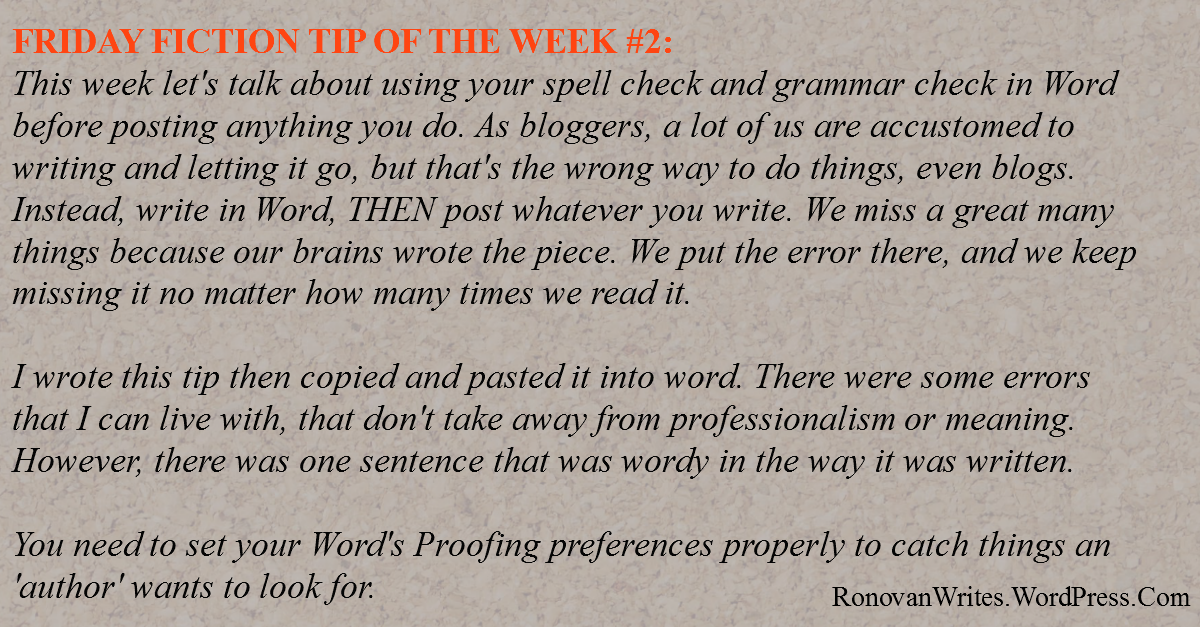
Friday Fiction Tip 2: Proofing

PROMPT FOR CHALLENGE #3

The last two weeks we’ve had words to choose from to use in our works of fiction. This week there is a picture provided. Use that picture as the inspiration for this week’s work. It’s obviously an airplane on a runway. But that’s all I’m saying.

An airplane on a runway, used for inspiration for writing prompt.


Ronovan Hester is an author, with his debut historical adventure novel Amber Wake: Gabriel Falling due out in December of 2015. He shares his life as an amnesiac and Chronic Pain sufferer through his blog RonovanWrites.WordPress.com. His love of poetry, authors and community through his online world has lead to a growing Weekly Haiku Challenge and the creation of a site dedicated to book reviews, interviews and author resources known as LitWorldInterviews.com.

Enter your email address to subscribe to this blog and receive notifications of new posts by email.

@RonovanWrites

© Copyright-All rights reserved by ronovanwrites.wordpress.com 2015
 

FRIDAY FICTION with RONOVAN WRITES Prompt Challenge #2

Friday Fiction with Ronovan Writes Challenge

FRIDAY FICTION with RONOVAN WRITES

With decades of writing behind me and daily learning of how to be a better writer, and by daily, I do mean constant, I wanted to give a way for current friends and future finders of this blog a way to push themselves to improve as well.

Through this challenge my hopes are:

  1. you will find your voice
  2. step out of comfort zones to discover a genre where your talent truly lies
  3. perhaps make connections that will help you become a better writer

DEADLINE IS:

23:59 EST Wednesday. I will then have Thursday to complete reading the entries and compiling the links and such. I do read all entries. You can ask any of my Haiku Challenge family/community members.

I DO ASK THAT YOU:

  • Keep it PG as all ages do follow the blog and may click through and read the entries. (C0ntinue for exceptions.)
  • If you do write a piece of fiction that goes past the PG level, copy the link into the comments of this post and make a note of it being such and give the reasons you think it is, such as violence, sexual content, language/profanity.
  • No violence toward children by adults or predatory aspects toward children. I know you may have two kids have a fight. I get that, but I don’t want gratuitous violence such as glorifying bullying. Also I can see you having a kid kicking some bad guy in the face for some reason. I get it.
  • No sexual assault against anyone.

WHEN YOU HAVE COMPLETED YOUR WORK OF FICTION:

Copy and paste your URL in the comments of the challenge post, or do a ping back to this post. This does not mean you must share a link today, Friday, just because the challenge says Friday in it. It means you must return to this post or ping back to this post.

A ping back is copying and pasting the URL of the challenge post into your post. That lets people know about the challenge, sort of, and is one way to let me know you’ve entered. Just make certain to visit back here to see your ping back is showing. Confused? Click HERE to see how to do a ping back.

If your blog is with WordPress, TAG your post as Friday Fiction with Ronovan Writes and in this way people may find your work in the WP Reader.

IMPORTANT!

It is possible, depending on the success of our challenge and the quality of writing, I may want to publish Anthologies, collections of stories, on Amazon in a FREE e-book format. IF YOU ARE INTERESTED IN ALLOWING YOUR WORK TO BE SHARED IN THIS FASHION CLICK HERE FOR DETAILS and a form to fill out. If you just want to write, enter, and have fun then you don’t need to do anything except write, enter, and have fun. And if you do try out the anthology idea and you change your mind you can always fill out the form and do what it says. It’s explained in that link.

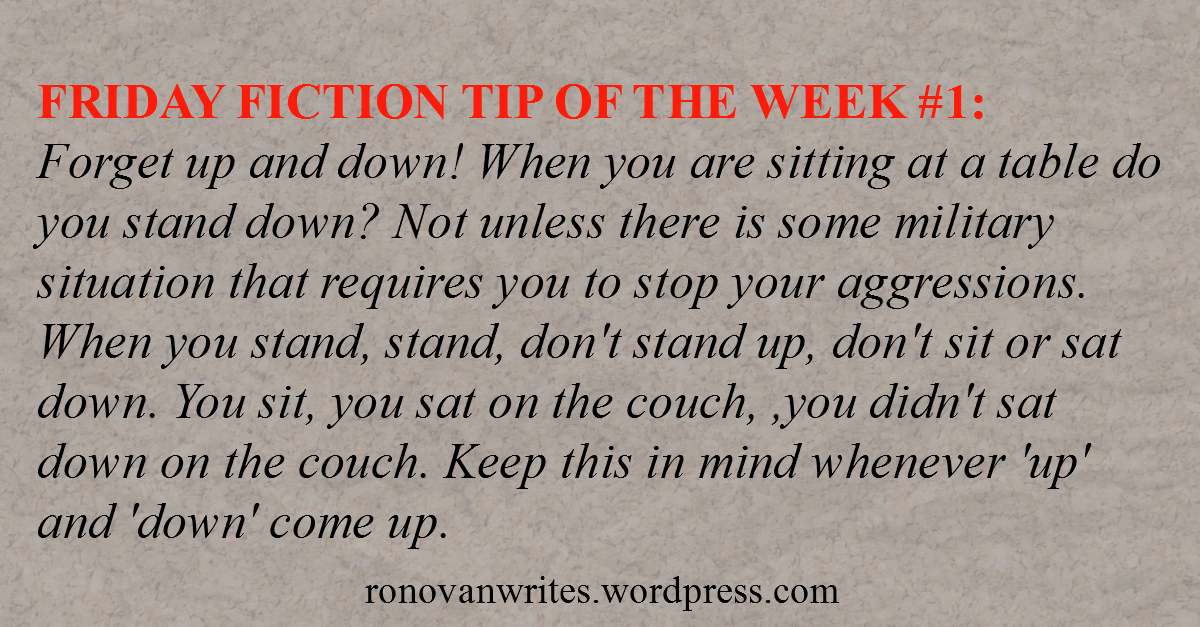
Fiction Tip Number 1

PROMPT FOR CHALLENGE #2

We’ll try the same type of prompt as last week. Choose at least two from the following list to be featured in a work of fiction for this week, and to make it simple, there will be no word count limit. But please, no book lengths this time around.

Burn, Weave, Cabin, Silver, Hush, Light

You can see my entry, The Library Date, by clicking HERE.


Ronovan Hester is an author, with his debut historical adventure novel Amber Wake: Gabriel Falling due out in December of 2015. He shares his life as an amnesiac and Chronic Pain sufferer through his blog RonovanWrites.WordPress.com. His love of poetry, authors and community through his online world has lead to a growing Weekly Haiku Challenge and the creation of a site dedicated to book reviews, interviews and author resources known as LitWorldInterviews.com.

Enter your email address to subscribe to this blog and receive notifications of new posts by email.

@RonovanWrites

© Copyright-All rights reserved by ronovanwrites.wordpress.com 2015

Silence is a Writer’s Friend.

Mother Teresa Silence quote
My quote today may seem somewhat one-sided when take at face value and purely at the word God. My being a Christian might even make you think of reasons I chose this verse today, but no.
 
I enjoy silence. Silence is one of my best friends. With the often times chattering mind of a person who has suffered a Grade 3 Concussion, by which I mean my brain does not stop for days at a time and keeps thinking and thinking without sleep, when I can find silence, I embrace it.

“We need to find God, and he cannot be found in noise and restlessness. God is the friend of silence. See how nature – trees, flowers, grass- grows in silence; see the stars, the moon and the sun, how they move in silence… We need silence to be able to touch souls.”-Mother Teresa

You may look at this quote as Mother Teresa apparently intended it or you may take it a step further, as you may with a great many spiritual sayings and scripture. I’m taking it a step further for writers today.

Take a look at that last line. “We need silence to be able to touch souls.”


There are times when you are writing and chaos is around you. That chaos might end up in your writing of a scene that requires a delicate touch. In silence I am able to quietly and calmly sink myself into a character, become a character, and bring out the inner heart, the soul of that character.


I close my eyes and type. Errors in spelling don’t bother me at this point. I type what my mind sees and what my heart feels during this silence. Those moments where I am successful at this I have found to be the ones beta readers connect with most. Or readers of certain poems connect with.


We see a great deal of advice about listening to music while writing, and at times I do like to create a mood with a play list. But my most successful moments are when I listen to the silence in my heart and mind and simply type. Silence is my friend, and one of the best I have.


And that silence isn’t just for writing, it’s for life. We need that time to give our minds, our emotions, and our bodies an chance to rest and heal.
For more#BeWoW articles, check the comments possible links and ping backs or Twitter for the hashtag. For more Writer’s Quote Wednesday articles, visit Colleen Chesebro at SilverThreading.com for her post sometime today.
Much Respect, Much Admiration, and Much Love
Ronovan

Ron_LWIRonovan is an author, and blogger who shares his life as an amnesiac and Chronic Pain sufferer through his blog RonovanWrites.WordPress.com. His love of poetry, authors and community through his online world has lead to a growing Weekly Haiku Challenge and the creation of a site dedicated to book reviews, interviews and author resources known as LitWorldInterviews.WordPress.com.

Enter your email address to subscribe to this blog and receive notifications of new posts by email.

@RonovanWrites

 © Copyright-All rights reserved by ronovanwrites.wordpress.com 2015

Writing while young. (And any other time as well.)

I have recently begun encouraging young people to write. They should write about their now in order to later be able to write about what it was like then.

“Always write your ideas down however silly or trivial they might seem. Keep a notebook with you at all times.”

We try to recapture the feelings we had when we were a certain age or in a certain place, but we so often rarely achieve that goal. Staring at the sentences we don’t feel them. They describe everything but relay nothing of what they speak of. I believe this is the one thing that keeps writers from submitting their work and becoming published authors.

Great masterpieces have been set aside in spiral bound notebooks to collect yellowed pages and dust. All for the simple fact the writer did not feel what they wrote.

Oddly, they may have conveyed more than they realized. Even if not capturing the moment for themselves fully, to others the paint on the canvas is three dimensional with smells of the ocean and heat on their skin from the setting sun.

The problem is they have no confidence in what they have done.

“Encouraging young people to believe in themselves and find their own voice whether it’s through writing, drama or art is so important in giving young people a sense of self-worth.”

Starting early in a person’s creative life helps build a creative confidence. And I believe there is no such thing as failure in creativity. You have created something, even if not what you set out to create. How many times has what any of us begun ended up exactly as we had planned?

“It is really important that focusing on things such as spelling, punctuation, grammar and handwriting doesn’t inhibit the creative flow. When I was at school there was a huge focus on copying and testing and it put me off words and stories for years.”

Today’s education doesn’t encourage so much creativity as much as it does scores to be nations. “Our nation beat your nation.” It doesn’t matter what it is, each nation is in competition. Even our children have been drawn into it, and not for the better.

But I believe we should rid our children of a great deal of the restraints early on and give them the freedom to create. Show them how to trust who they are and what they are. Give them free rein to explore and express.

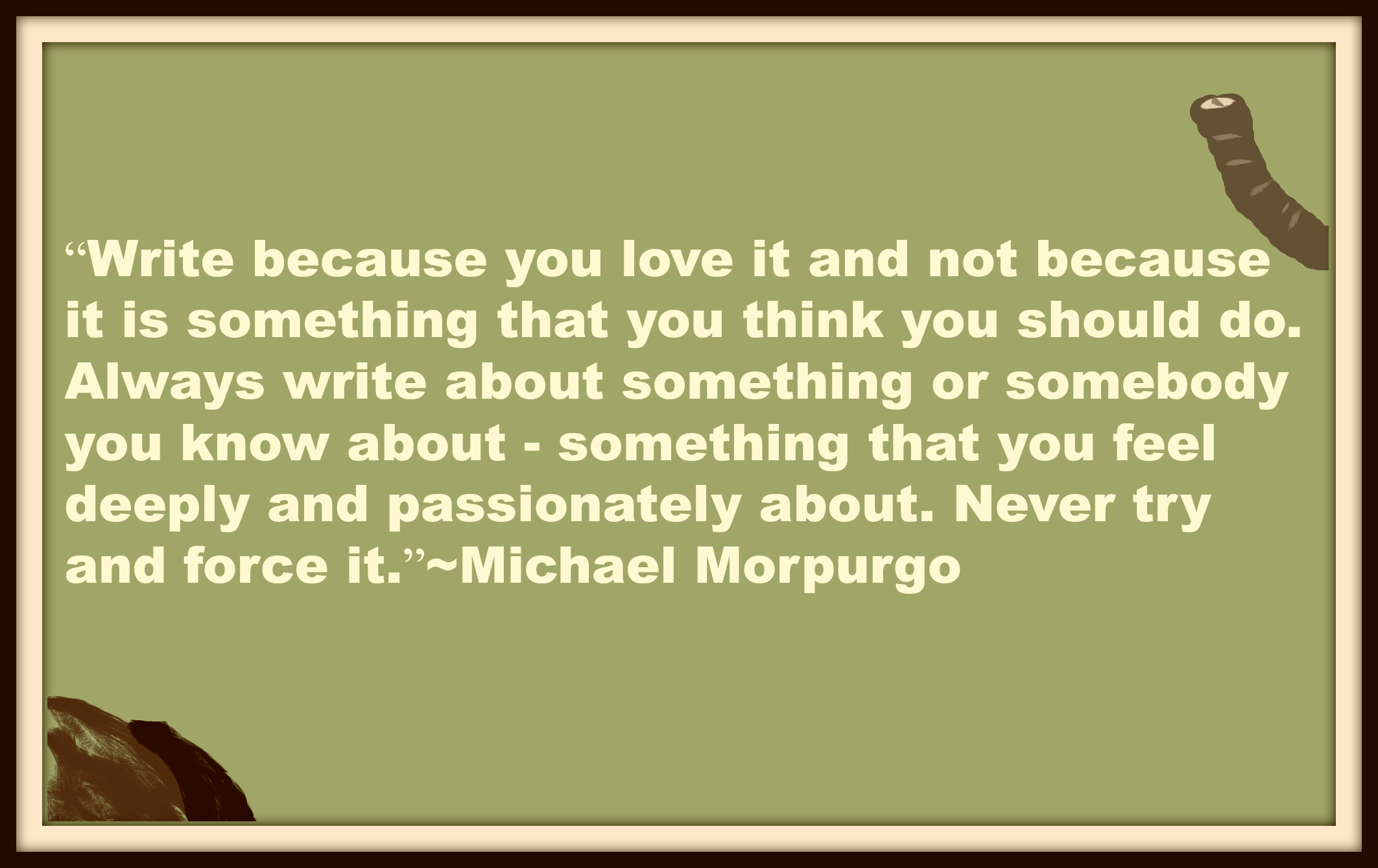
“Write because you love it and not because it is something that you think you should do. Always write about something or somebody you know about – something that you feel deeply and passionately about. Never try and force it.”

Michael Morpurgo quote image

Today’s quotes are from Michael Morpurgo, English author, poet, playwright, and librettist.

This has been part of Colleen’s, of SilverThreading, Writers’ Quote Wednesday blog share. Click the link to visit her quote for today, and join in.

Much Respect-Much Love

Ronovan


Ron_LWIRonovan is an author, and blogger who shares his life as an amnesiac and Chronic Pain sufferer though his blog RonovanWrites.WordPress.com. His love of poetry, authors and community through his online world has lead to a growing Weekly Haiku Challenge and the creation of a site dedicated to book reviews, interviews and author resources known as LitWorldInterviews.WordPress.com.

Enter your email address to subscribe to this blog and receive notifications of new posts by email.

@RonovanWrites

 © Copyright-All rights reserved by ronovanwrites.wordpress.com 2015
 

Breaking out of your comfort zone. Be fearless to find your writing voice.

Do you ever get in a rut with your writing and creativity? That’s what I’ve felt with my poetry of late. My long form has been pretty much the same old same old. Even when it’s lyric poetry it gets a little old to me.

Every now and then I like to experiment. Some of you may have noticed my experimenting the past few days. With this being National Poetry Month, I decided to change things up. Yes, I am doing the A to Z Blogging Challenge this month but I am also writing a poem each day. Some may not be as experimental in the rhyming scheme that I am currently working with, but you’ll see something each day.

I believe different styles of poetry can bring out different emotions and attitude. For creatives, as I call them, there is never just one creative aspect. We may focus on one but there are usually many facets. As one facet’s edges become worn and dull, turn your creativity and work on a different one. As you work that one, the other facet’s edges become sharper.

The more you write the more you discover what you can do and then use that new experience with what came before. Never be afraid to try something new. Even if it is for your eyes only, you will learn something from it. It’s like Haiku. I can’t tell you how many people tell me they never tried it before, were afraid of it, thought it was too hard, but now are addicted to it.

My writing tip today is to experiment. Get out of that comfort zone and find out something you never knew you could do before. That’s how I found my writer’s voice for a novel I am working on. I wrote and wrote and wrote, anything and everything and then one day, there it was.

Let’s connect.

https://twitter.com/RonovanWrites

https://www.facebook.com/pages/Ronovan-Writes/630347477034132

https://plus.google.com/u/0/+RonovanWrites/about

Image of Ronovan Writes


Enter your email address to subscribe to this blog and receive notifications of new posts by email.

© Copyright-All rights reserved by ronovanwrites.wordpress.com 2015

Ronovan Writes Week In Review

ronovan writes banner

In case you missed something from this week, here they all are. Hope you find something you enjoy.

POETRY

Bruised Heart-A Haiku

BLOGGING TIP

Blogging Personality: The Key to Success.

RONOVAN’S RANDOMS

Ronovan Writes Weekend Mick Flick. Do you feel Serendipity this week?

Depression, Understanding, and Finding Peace.


Maybe more next week,
Ronovan Writes

Enter your email address to subscribe to this blog and receive notifications of new posts by email.

© Copyright-All rights reserved by ronovanwrites.wordpress.com 2015


Ronovan Writes Week In Review

ronovan writes banner

In case you missed something from this week, here they all are. Hope you find something you enjoy.

POETRY

Pop Fail-A Haiku

Night Fails Me Again

Pure Love

Writing Tip

How do you write?

BLOGGING TIP

Blogging: Making Friends That Last

RONOVAN’S RANDOMS

Fallin’ but got up. And a blog tip thrown in.

Ronovan Writes Weekend Mick Flick. Grab some lamb & some olives. We’re going Greek.

Character is Huge.


Maybe more next week,
Ronovan Writes

Enter your email address to subscribe to this blog and receive notifications of new posts by email.

© Copyright-All rights reserved by ronovanwrites.wordpress.com 2015


How do you write?

How does one go about writing a novel or an article? They’re both the same thing of sorts, just one is a shorter story than the other. So how? That’s a question a lot of people hit search engines and begin asking. And you will find so many different answers you wonder how a book gets to be written at all. To be honest, every way you read is the right way and the wrong way. It all depends on who is doing the writing. In fact the right way for you to write a novel may not have been written yet. You haven’t written your novel yet. Until then you don’t know for certain what way is the right one for you.

Of course I have an opinion on the subject, sort of. Well I guess I do when it really comes down to it.

First of all, find a good source of how to do the basics of writing the correct way.

I read Self-Editing for Fiction Writers recently before starting my most recent project. The book showed me some things that are signs of a professional writer and an amateur writer. Taking care of a few of those basics from the beginning makes it so much easier going in to the next draft.

I listened to my book on a free text to voice download from Microsoft you can get.

I can choose male or female and even robotic sounding voices. You can also change the pace of the speech. I was happy to hear the dialogue and everything flowed well. The aforementioned book really helped. You need to listen to your book before you are finished with it. Whatever software or app you use, use one.

Things I’ve learned to do, especially that helps me:

I keep a separate word document open or even two. I keep them open for Things to Remember for the next draft and URL’s to websites that I find useful. What I am currently writing I need maps and some diagrams of types of transportation. I recalled finding one great site and I lost it. I didn’t copy the URL down. Now, if something looks even remotely good I copy the URL before I go any further. You may not think you will need that site again, but until your book is finished and in the hands of the reader, you will need it again.

Another thing I keep up is a spreadsheet.

As I create a new name, city or anything that has a name I make note of it. I do so in order of creation. I even make note of relationships if need be. This saves a lot of time when trying to recall the name of someone or where they appeared in the book.

But you still want to know how to write a novel.

Styles vary. Another author and I are writing books at the same time and we read for the other just to see how things are going. I write chapters of a certain length while they do it another way. Our genre is the same but my story has an entirely different feel to it than the other author’s story. Both stories work. Both stories tell what they need to tell and fit the type of story being told. We both like the other person’s story.

One thing you MUST do is find your writer’s voice.

I think I have created my own style of storytelling and so has the other author. Which way should you write? What length of chapters will work for you? You need to ask yourself a few questions.

  • What type of books do you like and how are they written?
  • What type of story are you going to write?
  • What voice are you going to use?
  • Who is your audience?

After you determine all of that, start writing and let the story tell you where the chapter ends and what voice to use. It doesn’t matter who your audience is. It matters how you tell a story. Can you tell a story? And if not, don’t worry, you will.

Why do I say you will? If you have a disappointment in something you write, that dream novel of yours and no one signs you to a deal, start writing. One thing you want to do is write everything. Dabble in every kind of writing genre you can and even every length of writing. Once you find that writer’s voice you are almost there. To me that is the key to it all, finding that voice.

People that have read the novels I’ve written have told me that even though there may be different genres involved they still hear me. I take that as a compliment. The genres work, but my storytelling comes through even if it is a Romance or a Middle Grade Fantasy.

One place you can try out your writing chops so to speak is writing.com. They have prompts of various kinds. It takes a little getting used to but I took steps outside of my comfort zone and wrote some stories I never would have otherwise. It’s a good way to have people review some of your writing and just write.

So how do you write a novel? The way to write a novel is to write. That’s it. Just write and learn to write the correct way. You know, an imagination is a terrible thing to waste when all you need is to know how to properly put it into words.


Much Respect

Ron_LWI


@RonovanWrites

RonovanWrites on Facebook

followmeonbloglovin


Enter your email address to subscribe to this blog and receive notifications of new posts by email.

© Copyright-All rights reserved by ronovanwrites.wordpress.com 2015

Writing Tips: Em Dash, Ellipsis and Error

Writing Tips: Em Dash, Ellipsis and Error

Let’s talk about flow for a moment. I am not one for punctuation. Anyone that reads my work will quickly discover that I am awful with it. I try to work around it by using different wording or shorter sentences. I imagine to myself this will hide my weakness. But to an expert, a pro it will be obvious.

There are three things I would like to talk about. This has to do with the flow of a sentence, its basic appearance. The em dash, the ellipsis, and the double space error are also three things that can call you out to an agent or editor.

I’ve written for decades now, but only recently, or so I believe, have I taken notice of the little things of writing that are really much larger than I ever imagined.

The em dash:

In all honesty I had never heard of this until recently. Oh, sure I have seen it but I didn’t know it had a name. I should have known everything has a name and if it doesn’t someone will come along to name it shortly just so they can say they did it.

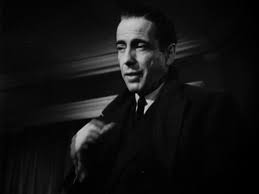
 Humphrey Bogart as Sam SpadeYou are to use the em dash when there is a sudden change or interruption in the sentence. Strunk and White states to use this only when a more common form of punctuation will not seem to work. That seems a little vague to me. But if you take a look at just about any form of writing you will see the em dash everywhere. By the way, the em dash is a double dash. Basically it is called an em dash because it takes up the widest letter font, the letter m. The en dash is a single dash.

Some writers just use it any time they like instead of commas or semicolons. Why? Either they think it’s cool or they don’t know punctuation or it could just be a style. Is it wrong? Truthfully, writing styles are slowly  becoming less and less strict with structure but there is a purpose to proper structure. It isn’t just for a good grade. It’s for a good read.

For me, I think I would use the em dash in harsh situations, or rather tough talk situations. If I were writing a detective novel I think the em dash would fit. I can see Humphrey Bogart in the Maltese Falcon reading out the punctuation of the dialogue now and I can hear ‘dash’ instead of ‘comma’ coming from him. Bogey did rapid fire dialogue great and he could switch between directions of dialogue so quick you almost didn’t see it happen. That script must have been em dash loaded.

“We beat it down to the docks and kicked the door in.”

“You did what?” Carson asked.

“I said—what’s she doing here?” Sam looked at the woman walking in the door.

Carson looked at the long legs as they passed him. “Sam—she’s doing anything she likes.”

In this example you get the fill that Sam immediately changes his words as the woman walks in. There is no pause. He just goes straight into questioning. For me that works. In the second case it doesn’t work for me. To me Carson is pausing after he says Sam as he thinks about the woman, so the em dash is too harsh there. The ellipses wouldn’t work because there is no missing dialogue or trailing off, there is just a hesitation so I would use the comma.

The Ellipsis:

The ellipsis is when you use (. . .). Of course that is without the parenthesis. You use three periods with a space between each one. Again, I had no idea such a thing had a name. And would you believe it . . . I had been using it wrong all these years. I didn’t put a space between the periods. Oops. And, I just used it incorrectly.  And no, I did not do that intentionally. I read back through this article and found it. It happens, so always proofread your work.

BacallYou use this when a sentence is trailing off or you are picking up in the middle of a conversation or a place I use it is when I am writing a telephone conversation but we only hear one side of it.

“We beat it down to the docks and kicked the door in.”

“You did what?” Carson asked.

“I said . . . what’s she doing here?” Sam looked at the woman walking in the door.

Carson looked at the long legs as they passed him. “Sam . . . she’s doing anything she likes.”

Now we have a pause here instead of the em dash and it’s as though Sam has looked at the woman a moment first before speaking.

The second pause works for me, but it’s not right. A comma will do the job.

 “We beat it down to the docks and kicked the door in.”

“You did what?” Carson asked.

“I said–what’s she doing here?” Sam looked at the woman walking in the door.

Carson looked at the long legs as they passed him. “Sam, she’s doing anything she likes.”

Combining the both the em dash and the comma pause in the passage works for me because I get a change of pace with each. There is a sense of urgency from Sam and casualness from Carson. It adds to character development with just a little change in punctuation.

The Space After Punctuation:

People from my age and older learned to type on typewriters, even if they were electric ones. This means we learned to hit the space bar twice after the ending punctuation of a sentence. For all those who do that, STOP! Computer fonts are set so that everything is spaced properly.

An agent or editor will look at your work and immediately see the spacing error. Should this be a killer to your career? No, but many agencies use interns and they like to sort through the submissions and for a punctuation pet peeve artist or someone who has a space phobia you have put them off already and they’ll just not continue. Hit the space bar once…ever.

© Copyright-All rights reserved-RonovanWrites.wordpress.com-June 16, 2014.

#NaNoWriMo Day 1: My #Writing #Tips for Today. “Stop with an idea.”

Yes, it’s NaNoWriMo time. So what am I doing instead of working feverishly away at a novel? Why I am here with a tip about writing away feverishly at a novel.

I had fun announcing my entry into NaNoWriMo. I like to play around with the fear factor. Yes, I am a little nervous, never having participated before, but I’m okay. I got the know how and stuff and great people to help along the way. It’s just getting used to the what to do on the site I have to deal with. But that doesn’t mean I am not going to help any of you that want to write, NaNo or not.

So here are my writing tips for today.

Stop With an Idea.

I wrote about this quite some time ago in an article about how to avoid writer’s block. I thought it would be a good idea to rehash it now.

One quick and simple tip, okay two.

Don’t stop writing at the end of a chapter

When you stop at the end, it’s kind of the end. Yes you have a cliffhanger, most likely, but then you stop, your energy is spent. You walk away from it, don’t do that!

That leads to tip two.

Leave yourself with an idea for tomorrow

Don’t write until you are out of ideas for the day. Stop short. You have a great scene you are doing, perhaps you are coming up on the cliff hanger ending to a chapter. Stop. When you come back the next time you have that cliffhanger to write and then you have the energy to write on through the beginning of the next and then however long you feel like it.  Just always stop with an idea in your head. Don’t walk away empty headed. Always have an idea to come back to and an idea to play around in your head while you are away.


NaNo NaNo

Ronovan

NaNoWriMo.jpg

Enter your email address to subscribe to this blog and receive notifications of new posts by email.

2014 © Copyright-All rights reserved by ronovanwrites.wordpress.com

2 Literary Agents Looking For Clients

All below originally from:

Chuck Sambuchino
Editor, GLA and CWIM

You all need to go and sign up for his emails.


2 Agents Seeking New Clients

Click on any name below to see the full mini-profile on the GLA Blog (with submission instructions). Good luck querying!

1. Mark Gottlieb of Trident Media Group

He is seeking: In fiction, he seeks Science Fiction, Fantasy, Young Adult, Comics, Graphic novels, Historical, History, Horror, Literary, Middle Grade, Mystery, Thrillers and New adult.

In nonfiction, he seeks Arts, Cinema, Photography, Biography, Memoir, Self-help, Sports, Travel, World cultures, True crime, Mind/Body/Spirit, Narrative Nonfiction, Politics, Current affairs, Pop culture, Entertainment, Relationships, Family, Science, Technology.

2. Soumeya Bendimerad of the Susan Golomb Literary Agency

She is seeking: She is actively seeking to represent literary fiction, upmarket/book club fiction, and select young-adult and middle grade. She is drawn to intelligent literary fiction with a fresh voice, coming of age stories, novels with elements of travel or stories set in other countries, family sagas, experiments with form, and complex but sympathetic characters. In non-fiction, she is seeking topics in popular culture, music and art history, unconventional business, politics, narrative non-fiction, sociology, cooking, travel, and memoir.

The Character Series Part 5/5: Character Beyond the Internal

The Character Series Part 5/5: Characters Beyond the Internal


VISUAL TRAITS AND TAGS

You are wondering what a Visual Tag (VT) is. A VT is a visual thing that you identify with the character. It could be a nervous tick such as an eye twitch or a swagger or how they wear their hat a certain way or even how they walk around with their shoes untied with short laces.  The VT gives a distinction to the character and should enhance the connection and description of the character and serve a purpose. For me, the shoelaces would be for a younger person who is perhaps attempting to be cool or unique or trying to fit in with a certain crowd.

Dialogue Tags are things most writers now about, but don’t often consider being character related.  We think of them as he said or she said. But there are affectations a character may have that you can mention, or how they whistle on certain letters or cannot pronounce certain words or letters properly. Once established you don’t overuse the tag any longer.


DIALOGUE: BOTH VOICE AND PHYSICAL

Dialogue is the key to your characters and often times the accepting or rejecting of your novel to be signed. I’ll get into Dialogue in another series because it is such a large subject but how one speaks externally and internally tells you everything you need to know about a character. Dialogue tends to be my stronger point, or so I believe, while I need to focus on a lot of the external and sensory things. Dialogue cannot be the book but it is a huge part of the book.


Body Language is something we forget about. The tension in how someone holds their shoulders drawn up so tight that they almost reach their ears.


PERFORM

What is another way to know a character? You need to see them in action. Seeing them react in certain situations and those reactions staying within character you have created. It’s an interesting thought but think of someone like Mr. T as B.A. on A-Team. Quiet for the most part, but his actions said enough. A tough guy with a heart. You didn’t really need any words. And it isn’t just action heroes this works with. You need to have the tender moments shown by the characters as well. Even a man on the witness stand at a murder trial has action.


Part 1: Creating Character Names

Part 2: What to Avoid when Creating Character

Part 3: Giving Your Characters Their Character

Part 4: Creating Believable Characters


 2014 © Copyright-All rights reserved-RonovanWrites.wordpress.com

The Character Series Part 4/5: Creating Believable Characters

The Character Series Part 4/5: Creating Believable Characters


STAY WITHIN CHARACTER

Atticus Finch of To Kill a Mockingbird was a noble and honorable man. Imagine if you will if you saw him drunk and groping a waitress who was saying no.

I don’t think you would have the same respect for him. I know I wouldn’t. A character, good or bad, needs to stay in the character that you led the reader to believe he or she was unless you have a very good reason for a surprise change. Sure characters have a change of heart in the end, but perhaps there at some point along the way needs to be a glimmer, a hint of something in them.


BALANCE POSITIVE AND NEGATIVE

No character is usually completely perfectly good or bad in the aspects of either just morals or perhaps self-control or habits. To make one so is unbelievable.

I have a character in a Romance/Love story I’ve written, a trilogy. He’s the hero type. Almost perfect. But he does have flaws in him that show up if you are paying attention and realize it. The story is told from the viewpoint and voice of the woman. We see and hear what she does, but we interpret what she sees and hears differently. His flaws aren’t exactly negative, but they are to some extent.


PROBLEMS READERS CAN RELATE TO

Playing off the character above, you need to have problems the readers can relate to. The character above is in love with the woman but she’s engaged, and his problem is being in love with a woman younger than he is and trying to be a good man when he really wants so badly to tell her the truth. But he believes if he does then he is a bad man, and he always promised he would be a good man like his father.

I think we have all been in a situation where we like someone that is already spoken for and we can relate to how much that hurts. You instantly want to root for this man.


There are so many things that go into creating a character that it’s really the most difficult part for me. Writing a story, the idea is easy for me. Nailing down all of this is the hard part. But once you do it then things are so much smoother going.


Part 1: Creating Character Names

Part 2: Things to Avoid when Creating Characters

Part 3: Giving Your Characters Their Character

Part 5: Character Beyond the Internal


 2014 © Copyright-All rights reserved-RonovanWrites.wordpress.com

The Character Series Part 3/5: Giving Your Characters Their Character

The Character Series Part 3/5: Giving Your Characters Their Character


CONTRASTING CHARACTERS

What if Batman and the Joker were exactly the same? What if Ashley Wilkes and Rhett Butler were exactly the same? it wouldn’t be very interesting. What’s the fun in two competing characters that are the same? There is no conflict, you have no idea who to choose.

When you create the protagonist and the protagonist . . . give them contrasting characteristics that are obvious to the reader even if they aren’t to the heroine or hero.


LOVE AND HATE

To go along with Contrasting Characters you need to have one for the reader to love and one for the reader to hate. Again you have Batman and Joker. In Gone with the Wind, who or what was the antagonist? Something to think about. Was it the Yankees, the carpetbaggers, the scalawags, the old guard South, or was it even perhaps Scarlett?  Could it have been a mindset, ignorance? Yes, there are more characters than just living, breathing things, but let’s not get into that now.


SENSE OF PURPOSE

No matter how much you want your reader to love a character or hate a character those characters have to have a sense of purpose to be characters. Just existing will not work. Batman wants to rid the world of crime. Joker wants to maybe just rid the world of the world. But what makes the two long-lasting and beloved characters is that they continue to have a sense of purpose and the purpose is something people can identify with on some level, no matter how fantastic it may be.


Creating a character that is lasting, memorable, and connects with a reader is more involved than we think. Groundwork in the beginning not only makes the characters memorable for you, but it makes for easy writing as you will know the characters so well.


Part 1: Creating Character Names

Part 2: Things to Avoid when Creating Characters

Part 4: Creating Believable Characters

Part 5: Character Beyond the Internal


 2014 © Copyright-All rights reserved-RonovanWrites.wordpress.com

The Character Series Part 2/5: Things to Avoid When Creating Characters

The Character Series Part 2/5: Things to Avoid When Creating Characters


CHARACTER CLUTTER

Cut down on the number of characters you have by having one character take on the roles of others. You don’t need your heroine to have five girlfriends that keep appearing. One girlfriend is enough with two at the most. Make it simple for the reader in regards to characters to remember. Put their focus on the story and the main characters, and make it easy on yourself as well. The fewer the characters the easier it is for you to have to remember while writing.

I have a Romance/Love story novel where the leading lady meets up with her high school team for lunch. In this case, it’s okay to have several characters, but not as recurring characters. Maybe two or three show up again.


SIMILAR CHARACTERS

Along with Character Clutter, you have characters that are basically the same. You don’t need that unless it is specific to something in the storyline. When I read Gone with the Wind there are a few too many characters in the beginning for my liking, but slowly it dwindles then it picks again to similar characters in Atlanta. Yes, there is a party in the beginning so I get it, but it is still a touch difficult to keep up with at the party itself. In Atlanta, there are the matriarchs of society that are almost impossible to keep up with. They all become a blur, and perhaps that is part of the story. They are all the same. Scarlet is different and Belle Watling is different and that is why you remember them.


METAPHORS AND SIMILIES

You have the characters and you need to describe them. Be original.


A simile is when you describe something in comparison to something else.

Her skin was as pure as the white of a Magnolia petal.


A metaphor is when you say something is something, you transfer the characteristics onto the person.

Her lips were sweet red berries and he needed to taste them at least one time.


One very important thing to remember. Don’t do the literary version of the mistakes people look for in time period movies. The digital watch on the Civil War soldier. Make sure when you metaphor or simile that you keep in mind what you are using and the words you are using, they need to be time period applicable.


Part 1: Creating Character Names

Part 3: Giving Your Characters Their Character

Part 4: Creating Believable Characters

Part 5: Character Beyond the Internal

Much Respect

Ronovan


 2014 © Copyright-All rights reserved-RonovanWrites.wordpress.com

The Character Series Part 1/5: Creating Character Names

The Character Series Part 1/5: Creating Character Names

You have a great story idea then you begin to write and you come to that moment . . . what is the name of the primary protagonist? The problem continues as you come to each character thereafter, including secondary and incidental characters. It’s a bear of a problem even if you don’t think so right now. You may even have written the novel and now realize you have name problems.

Following are some things to consider when naming characters:


CORRECT NAME FOR THE TIME PERIOD

There are a lot of names that can be used in present-day novels because people are becoming creative or retro in naming their children. However, when writing one easy way to help immediately let a reader know if your story is in the present-day or in the past is by the names you choose to use.

Example 1

Khloe looked out over the sloping green lawn down to the path below. Would he be there this morning . . . as every morning? Would Jayden ignore her father and still pass by regardless of the threats? Did he love her that much?

Think for a moment what time period these names bring to mind.

Example 2

Mildred looked out over the sloping green lawn down to the path below. Would he be there this morning . . . as every morning? Would Edgar ignore her father and still pass by regardless of the threats? Did he love her that much?


The First example includes popular names for 2014, while the last includes names from the early 1900s. Even not knowing this information you would know the first should be set in modern-day by the names, they are not names to fit into The Great Gatsby. And Mildred and Edgar are not common names these days. Sure you could use them in a modern setting but just keep in mind how easy simply choosing names will help in having to not explain a lot more in your writing about the time, era your story is set in.


REGIONAL NAMES

We talked about using names to help set the general time period of a story, now how about the place, the region, or country? In the United States names are slowly mingling but on the whole, you can use names that will give the reader a feel for where you are headed.


Missy looked out over the sloping green lawn down to the path below. Would he be there this morning . . . as every morning? Would Billy ignore her father and still pass by regardless of the threats? Did he love her that much?

I get a rural feel from the above names. More than likely in the south.


Khloe looked out over the sloping green lawn down to the path below. Would he be there this morning . . . as every morning? Would Jayden ignore her father and still pass by regardless of the threats? Did he love her that much?

This pairing gives me a feel or the urban, probably a larger city as well.


I know, all of you could and are coming up with better examples than I am but you get the point.


BE ORIGINAL

When you do create names, even Regional ones, be original. You don’t have to go with Billy Bob to let people know the man lives in the South. Beau is a Southern name and so is Luke. One of those is a little stereotypical and the other less so. It is all up to you how you want to do it, maybe Beau is the name you want to use and it fits somehow. You want the name to stand out but also to be comfortable for the reader to say. Make sure to say the name out loud while using it in a sentence. I like the name to feel good coming off my tongue.


AVOID GENDER CONFUSION

If you really want to mess with your readers’ minds then use names that can be either male or female. As the years pass by this is becoming more of a thing. If you say Logan one may think of Wolverine the superhero or they may think of the little girl that was best buddies with their son in preschool and he pushed her in her little walker thing in between two baby beds and said “Bye-bye” as he looked around and saw his parents had arrived. Ashley and Paris are two other examples as well as Sandy.  Add Morgan to that as well.

Don’t cause confusion to your readers. Make them comfortable as quickly as possible. You don’t want them to even have to think about gender, you want them falling into the story.


NOT THE SAME LETTER

Don’t have your main characters all having names starting with the same letter. You want distinction for them quickly and no confusion with any other character, especially a protagonist and antagonist.


Next:

Part 2: Things to Avoid when Creating Characters

Part 3: Giving Your Characters Their Character

Part 4: Creating Believable Characters

Part 5: Character Beyond the Internal

Until Next Time,

Much Respect

Ronovan

 2014 © Copyright-All rights reserved-RonovanWrites.wordpress.com

How to come up with a book idea.

How to Come up with a Book Idea


You want to write a novel, but you don’t know how to come up with an idea. You’re sitting there at your keyboard or notebook and it just isn’t happening. You’ve doodled Mickey Mouse several times and you’ve created som new abstract work of art that might become the next wallpaper design for your computer, but yet, zero, zilch, zippo. Welcome to The Reality World, Novel Limbo.

Yes, that was a slight homage to The Real World, the real one from way back when. Yes I saw the very first one when it was in New York. You know, back when reality TV was not as obnoxious and pardon my saying this ‘silly’. If you have been around you know I can’t say the ‘st**id’ word because I’ve taught my son ‘B’ that it’s a bad word. You never want your kid to accidentally say something just because its part of is vocabulary. Okay parenting thing over with.  I still wonder about that date the girl went on and the guy told her she had wide hips that were good for breeding. What was that about?


But now back to the coming up with a book idea. And actually my digression up there is part of the problem, distractions. Or is it?


Why couldn’t I write a book about the ‘Bad words for Boys’? I just copyrighted that in case anyone is wondering. ChuCHING! I guess that’s how you spell that. Anyway, that’s an example of how to come up with an idea. Just listen to yourself and pay attention to your world. I could have edited the whole part out about my son ‘B’ but I didn’t. I am free flow writing the article and let it happen and there it is. I’m leaving it in as an example.


But let’s get down to other ways of how you actually can do it. I didn’t come up with the idea for ‘Bad word for Boys’ until I started writing this article and actually wrote those words of randomness.


Things to do:

  • Live life-Yes, you should experience life so you have something to draw from. This isn’t to say go out and sky dive. This means live. Exist. Function.
  • Write what you know about-I know it’s an old standard but it’s true. I know about what ‘Bad words for Boys’ are, so I can write about it. I could write about living with various health problems that are out of my control.
  • Sit down and just start writing-Just write whatever comes to mind, journal if you need to, just write and an idea will come. I encourage people to do writing prompts, either from a book of them or even those posted daily through websites. I seriously wrote an article about a need for Pants Vending Machines from a prompt. I never would have come up with it if there hadn’t decided to see what the prompt of the day was, and it was about Vending Machines that were needed. I chose pants.
  • Take a favorite story and twist it 180-Look at the takes on Little Red Riding Hood, Snow White, and The Wizard of Oz. These are direct twists, but you can even take a story and just twist it and make it its own.
  • Write down your thoughts-Keep a note pad handy or some recorder device to write down what comes to mind even at night. You won’t remember that great idea in the morning. I know I had a great poem idea the other night and I even remember that the lines were perfect, but I don’t remember what they are.


I’ll give you two examples of how ideas can happen. I recently interviewed two authors; Alysha Kaye of The Waiting Room, and Cyril Bussiere of The WorldMight. The books are completely different, worlds apart, but both involve love that is apart. Now let’s look how they came up with those ideas.


Here is Alysha Kaye from our recent interview:

Alysha Kaye Author The Waiting Room

“I had a dream about waiting for my boyfriend after death. I was in a strange room that looked a lot like an airport terminal. I wound up writing him a (very cheesy) poem about it and somehow, that became an entire novel! I couldn’t get it out of my head.”-Alysha Kaye


A dream that ended up as a poem that turned into a The Waiting Room, a published novel. You’ve had those dreams. You just need to write them down as quickly as possible when you wake up while they are fresh. Will those dreams be a book? Not always, but you will have them there to find out.


Now for Cyril Bussiere from a quote in our interview:

cyril.bussiere

“Then an idea came to me while driving a U-haul truck across Texas . . . about a princess trapped in a sleeping beast and her prince trying to free her; and he needs a word that has never been said to wake the beast up and rescue her.”-Cyril Bussiere


See, the monotony of driving a truck across Texas probably led him into this mindless state of wandering thoughts and there it was; his first novel, The WorldMight. It took time before it continued further but it did continue.


If you wanted to you could sit down and force yourself through a regime to develop an idea.

  • Take a topic or subject you like
  • Start researching it
  • Find some fact either known or preferably obscure, and start working with it
  • Then start either by the seat of the pants writing or outlining


I had an idea for a novel but had no idea how to work it. I started researching and things suddenly clicked. Now the book is so in depth that I haven’t finished it because of the complexity of what I want to do with it, but I could make it a lot simpler and just finish it. (By the way, using ‘just’ is a pet peeve of mine. I can’t stand it when I use it.)


But there are these little things you can find during research that will amaze you. If you are amazed then there will be others that are as well.


The real secret? I’ll tell you but you can’t tell anyone else. You have to keep working at it. Don’t give up on it. Writing is easy, writing well is difficult, creating a novel and publishing it is excruciating. That’s not trying to discourage you, that’s just telling you what it can be, it’s keeping it real . . . Real-no, not going to do it again.


So how do you come up with a novel idea? And it truly is a novel idea because you want to be a different to capture the attention of readers. You pay attention and listen to yourself and write. Write down every little dream you have, every thought you think is cool, random, or oddball, journal, just write.


Much Respect

Ronovan


© Copyright-All rights reserved-RonovanWrites.wordpress.com.

Make me WANT your Blog

What can your Blog give me that no one else can? Why should I read something from you instead of someone else? Make me stay on your site and keep coming back for more. How can you do that? How can you MAKE me want to come back for more? So what I am really asking from you?


Make me WANT your Blog

by: Ronovan


I know a lot of bloggers who, especially of late, are finding it difficult to keep creating things to write about. They cannot come up with a new fiction story, a new poem, a new 10 Things list, or a new How To list. How many sites do you know that have those types of things?


I’ll go out to a movie while you count, and maybe a bite to eat as well.

E.T. Movie Poster
Sniff, sniff . . . Ellllliiiiiooooot.


Oh, um . . . hi.

Yeah, I’m back, you can finish the counting later.

I have some friends who do the slice of life and list blogs very well and I love them. But they can take their toll on you. Just take a look at them and there is more than just a story about what happened. They tell a story and the good ones go through creating a lot of images to go along with it to make it that much more fun for you. All that can equal to . . .

Burnout signYou’ll likely see that as my header photo for my blog someday . . . soon.

There are others who just are getting to the point of their blogs are not going in the direction they want them to. They want to continue but they are lost somehow.

Then for some reason they will publish something about where they are from. It might be personal memories, opinions, or photographs. Their voice in the writing is completely different. It’s personal. And that is when they draw me in completely. Even if you are from the city next to mine, I still want to see what you see and learn about how you see things.

Lady teacher in front of map.

I want to learn.


We have an opportunity through our blogs to connect to people around the world and turn eacMilitary Helicopter over Pakistanh country into a place with human beings in it and not just a news broadcast of something bad happening or where a politician, sporting event, or celebrity happens to be. The news turns the place into the event.
The event has nothing to do with the people.

Two boys in lake Pakistan.


Mix your blog up a little with a bit about your country. I know I don’t do it, but I am so busy putting poetry and tips out that I rarely have time to even think about anything else. But I have done a couple of articles about Southern Culture. And I plan to do a little more.


I think some of my writing tells a bit about where I live through my life. I tend to explore deep feelings and emotions in my writing, not intentionally, but it happens. I know not everyone will do that. Use your photography and your experiences and tell us the story of how your country, your city, your culture really is.


© Copyright-All rights reserved-RonovanWrites.wordpress.com-July 03, 2014.

How To Write A Haiku Poem In English Form

All links open in a new window unless noted as ‘you will leave this page‘.


There are various Japanese Forms of poetry based on syllable structure (see Haiku, Tanka, and Haibun. It’s all poetry to me. Learn the difference.), much like many nations and cultures of the world (see How to Write an Espinela or Décima Poem). The Japanese Haiku poem is probably the most challenging due to its low syllable constraints. (5/7/5 or 3/5/3 or 2/3/2) If you really want to be challenged, try a 1/2/1. I don’t think this is really a Haiku form, but I wouldn’t be surprised if it was. Examples further down the page.

This post discusses How to write a Haiku Poem in English Form. Haiku purists in the Japanese style attempt to write a Haiku that can be read in one breath. This means it’s minimal in word choice while vivid with imagery and short at the same time. The more you write, the easier it becomes to exclude words such as the, is, and there, etc. from your thoughts while thinking of your poems and count syllables in your head in the middle of a drive to work or store. I find myself tapping with my fingers counting syllables in the strangest locations.

Six things to remember about Traditional Haiku form:

  • You have three lines of poetry.
  • 17 total syllables, some say sounds, in the 5/7/5 pattern. (The syllables of words may vary due to the country’s English you speak.)
  • You normally tell two opposing images in the poem.
  • Lines one and two should read as a complete sentence and lines two and three should read as a complete sentence. Easier than it sounds.
  • Haiku do not have titles/names.
  • You normally use mostly descriptive words and as few filler words as possible, such as the, and, there, is, etc. Note lower in the post my example 3/5/3 version of the 5/7/5 Haiku I provide as an example. You get the same message with each version.

Notice the word normally. You can have the poem be about aspects of the same thing, but normally you look at it from two different ways.

Artistic and traditional elements include kigo or words that are related to seasons: (Learn more about kigo here, a different website. The following through Kigo List T-Z are from the same site.)

  • Nature
  • Colors
  • Seasons

Kigo list A-J
Kigo List K-S
Kigo List T-Z

Noted on the site that not all words are Kigo. “Some are haiku TOPICS (keywords) to be used during the whole year.” There are several helpful links in the site’s sidebar.

You use these elements:

  • to give a visual of whatever you are attempting to relay
  • and usually include the season you write it in

Remember you can use 3/5/3 or 2/3/2 syllable structures as well as many others, but the three below are plenty to start with.

Three examples of the same haiku using the different syllable structures.

5/7/5 Example

The tree is falling,

Down among the river rocks,

Fish bring forth new life.

Lines one and two read as: The tree is falling down among the river rocks.

Lines two and three read as: Down among the river rocks, fish bring forth new life.

  1. The tree is falling and dying among the rocks of the river
  2. And fish are living and bring life among the rocks of the river
  3. Two opposite things happening.
  • Note the capitalization and punctuation in the haiku. It is important to use those wisely to convey your intended message.

3/5/3 Example

tree falling

among river rocks

fish new life


2/3/2 Example

tree falls

mid stream’s rock

new life


1/2/1 Example

tree

feeds water

life

Strangely enough, I like the 2/3/2 version the best and this is the first time I’ve tried one. This is an update on September 12, 2020. The original post is from July 02, 2014. As you can see, over six years and my first try.


Opposites are not a MUST, but are the true way of Haiku and add to the challenge. And you don’t want to reveal to much in the haiku so the reader is able to make an interpretation. Do not let that prevent you from writing. The more you write the closer you get to achieving true Haiku.

Matsuo Bashō Statue Haiku

As Matsuo Bashō put it,

“The haiku that reveals seventy to

eighty percent of its subject is good.

Those that reveal fifty to sixty percent,

we never tire of.”


My original Haiku reveals 100%.

 The tree is falling,

Down among the river rocks,

Fish bring forth new life.


Can I take the Haiku and make it fifty to sixty percent? 

Life splinters apart,

Down among slippery mounds,

Life brings forth new life.

In this new version, the same thing is said but also leaves some interpretation to the reader, which in a way I like to do for the reader. Give the reader something they can connect within their own way. It is easy to slip away from writing haiku this way as you begin to play around with different themes.

That is the basic way I usually like to write Haiku but often veer off into another message. It is fun, challenging, and an artform. I am not saying I am an artist, but I do believe those who can do it well, are. I am still a finger painter in this world, but I enjoy staining my skin in the ink.

To get to the point where you can consistently write like a true Haiku artist it could take years, but writing is the purpose and eventually, you get there, if that’s where you want to go. Otherwise, enjoy the way you want to write and the message you wish.


Below should be all you need to help with Haiku: Sure there are plenty of sites you’ll discover, some thatt even write the haiku for you, but why?

  • The best syllable counter is the dictionary. Others I’ve used will give different counts to the same word or the same Haiku. Stick to the dictionary. I’m deleting the syllable counter link from my poetry challenge with my next challenge, 10/12/2020. https://www.merriam-webster.com/
  • For synonyms, thesaurus.com. It also provides antonyms and the drop box where you enter your word also includes DEFINITIONS as an option.
  • The Kigo Lists

For other types of Haiku click and read-Haiku, Tanka, and Haibun. It’s all poetry to me. Learn the difference.

To learn Freku, which I came up with, click and read – NEW FORM of Haiku & Poetry.

To learn the Shi Rensa or Four Chain haiku, click and read – Four Chain | Shi Rensa Haiku.

For examples of my own Haiku offerings click here and you will leave this page.

For a list of the weekly Haiku Poetry Prompt Challenges and the current challenge post I host, click here and you will leave this page.

Much Respect

Ronovan

Originally posted July 02, 2014.


Enter your email address to subscribe to this blog and receive notifications of new posts by email.

Copyright-All rights reserved-RonovanWrites.com 2020.

Espresso – My top 3 lessons from my first week as a writer. By: Brett.

Well I have to say that this is an amazing article. It humbled me in many ways. Everyone visit this link to Brett’s page and Follow him. He’s starting a life as a writer and I have to say that if this article is a beginning, then I am so far behind him that I don’t deserve to have my name mentioned in it. So yes, I say again. Click and read and Follow and also follow him on Twitter as another show of support. @BrettsFuture We all need that little shot of double espresso sometimes.

BrettsFuture's avatarBrett's Future

Espresso

I sit here in restless repose forcing myself to relax. Mind aflutter, new venture afoot; uncertainty over my standing. In my heart the path is right. But that demon called fear casts a shadow before me.

I reflect upon the week of boldness I have just completed. There are lessons I’ve learned along the way, important reminders to guide my journey. Initial thoughts are important thoughts I tell myself as I struggle with my focus. Why is that I ask? Surely the lessons grow stronger with time, with greater experience? So I sit and contemplate why I feel this way.

Then I realize that these initial thoughts are like espresso, the initial injection in coffee each morning. That first rush after waking as you consider the long day stretched out ahead. You know that the cup you hold in your hand will not get you to the end. But that…

View original post 772 more words